
“Healthy coffee” is often used in advertisements, but its meaning is rarely explained. Coffee is not a drug, and no single brand will automatically make you healthy. What matters is... a healthier way to drink coffee: choose the right coffee for your body, manage caffeine, and limit unnecessary additives. Here are some simple guidelines you can use.
1. The caffeine suits your body
Caffeine isn't the enemy. Many healthy adults can consume it in reasonable amounts. Food authorities like the FDA in the United States state that around 400 mg per day is generally not associated with adverse effects in healthy adults. This limit may be much lower for pregnant women, adolescents, or people with certain conditions.
The problem is, everyone responds differently. Some people are fine with three cups, while others get nervous after just one. If you're the latter, decaf coffee or low caffeine coffee is a middle ground: still drink coffee, but with much less caffeine.
2. Without excess sugar
Black coffee is virtually calorie-free. What makes it heavy is the sugar, syrup, creamer, and sweetened condensed milk. The Indonesian Ministry of Health recommends consuming no more than 50 grams (about 4 tablespoons) of sugar per day, from all foods and beverages. Just one glass of the modern-day coffee with milk can consume most of that allowance.
Because of that, coffee without sugar is the easiest step towards healthier coffee drinking. We discuss the tips in 7 Reasons Why Sugar-Free Coffee Is Better for Dieters.
3. Comfortable on the stomach
Some people experience a burning sensation or bloating after drinking coffee, especially on an empty stomach. Triggers can be caffeine, acidity, or simply too strong coffee. For those with sensitive stomachs, we've written a special guide: Is Coffee Safe for the Stomach?
4. Does not disturb sleep
Caffeine can linger in the body for hours, on average about five hours before its concentration decreases by half. Coffee at 4 p.m. can still be effective when you go to bed. Lack of sleep can actually make you crave more coffee the next day. If you want coffee in the afternoon or evening, choose a low-caffeine version.
5. The material is clear
Read the ingredients. 3-in-1 instant coffee often contains more sugar and creamer than coffee. Good coffee will clearly list the type of coffee and additional ingredients.
Decaffeinated coffee vs regular coffee: summary
- Caffeine: Regular coffee ±80–100 mg per cup, decaf coffee generally ±2–15 mg.
- Flavor: Decaf is a little softer, the coffee character is still there.
- Drinking time: decaf is more flexible, including afternoon and evening.
- Suitable for: Decaf is perfect for those who are caffeine sensitive, want to sleep better, or are reducing caffeine on the advice of a doctor.
Wakiro's way of translating "healthy coffee"“
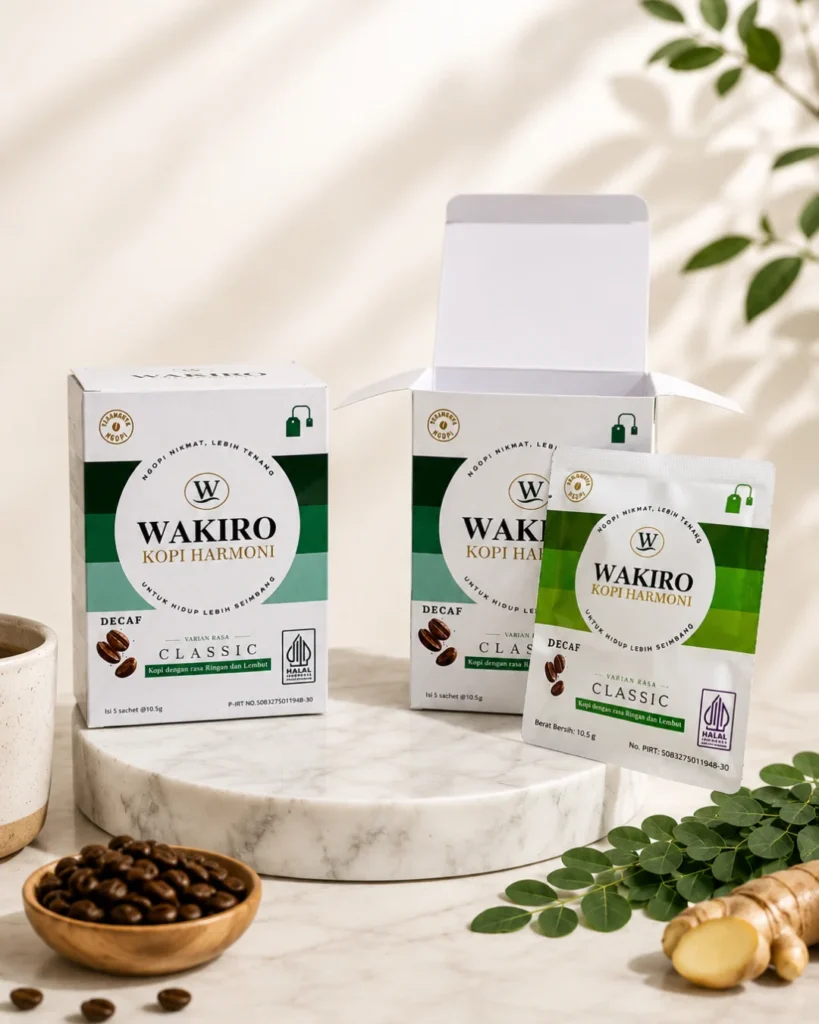
Wakiro Kopi Harmoni is made with the above principles: Robusta decaf (low caffeine), no added sugar, and combined with traditional Indonesian ingredients long familiar in Indonesian cuisine, such as arrowroot starch and moringa leaves. It comes in a dip pouch format, so no pulp is consumed.
- Classic for smooth daily coffee.
- Warm Spice for those who like ginger and cinnamon.
- Active with added whey protein.
Frequently Asked Questions
Is decaf coffee healthier than regular coffee?
Not always. For those who are sensitive to caffeine, decaf is more friendly. For those who are tolerant of caffeine, regular coffee in moderate amounts can also be part of a healthy lifestyle. The key factors are the amount of sugar, portion size, and individual health.
Can sachet coffee be healthy?
Yes, depending on the contents. Sachet coffee without sugar and creamer is very different from 3-in-1 coffee. Read the ingredients label.
This article is for general educational purposes only and is not a substitute for advice from a doctor or healthcare professional.